
| President: Nelson Eddy (315)523-3923 |
VP: Brian Gorman |
Secretary: Jeannie Fox |
Treasurer: Sandra Hubbard |
Corresponding
Secretary: Mary Vaerewyck |
|
|
|
The Starbuck Arena ... Help Us Find The History Of This 1916 Starbuck Avenue Building
Written by Mr. Ron Mitchell
When I was in school, history was a subject that I cared little for. It was beyond me why wars, Who discovered what and when? Who ruled who ... how does this affect me? That history cannot be that important! Can't it? 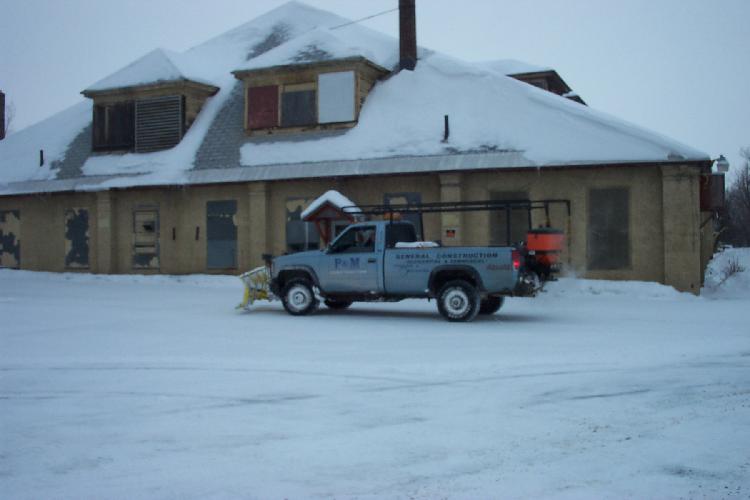
Such
is the building that my wife, Ronnie, and I purchased this year from
STX Corporation. When it was built in 1916, it simply was a cafeteria
that fed 7500 people, people who worked across the street making ammunition
for World War I. Now that was history in the making, but who knows
it today? When the facts are not passed down from generation to
generation; after three generations, all that information or knowledge,
is gone. It simply becomes unimportant. But how many lives
were changed because of that building? How did it affect the economy
of Watertown, the economy of America, the world?
Little is recorded on the steel, wood, block and stucco building. Who actually paid for it, who labored to build it? Who worked there the very first day it opened? What was the pay? What was the menu? Did people have to pay for the meals; if so, what was the price for lunch? How many years was it a cafeteria? Right now, we don't know the answers, but history can reveal itself through people, people sharing information. Remember a few sentences back, when we discussed that after three generations all is lost? Who can name their grandparents' first names? When and where were they born, where did they live, what did they do, what did they stand for. Do okay with your answers? Let's go down one more generation. Who were their parents, your great-grandparents? Now think of your own lives and children. Scary isn't it? Our building, well after it was a cafeteria, it became a boxing arena. Sports were not popular back then, as they are today. At least it appears that way, for nothing seems to be recorded other than a brief mention in the Watertown Daily Times, noting that Jack Case, a Reporter, nick-named a boxer Sugar Ray Robinson. I heard that name in my youth, even though I wasn't a boxing fan and I was not aware of the building known as the STARBUCK ARENA. But than again, I was raised on a farm in Philadelphia, New York. We came to Watertown only a few times. Some of you reading this remember the days before Wal-Mart, K-Mart and internet shopping. Small towns had everything that you needed. Going to the city was an event. But if you were a kid on that side of the city, in Watertown, you were aware of the fights in the STARBUCK ARENA. My bet is you probably tried to sneak in to see the adult entertainment. How many fights were there? What days were the fights? How much did it cost to get in? Did they sell food and beer? If they did, who sold it? Who were the boxers? Were there posters on the walls; an outside marquis? What did they get paid? 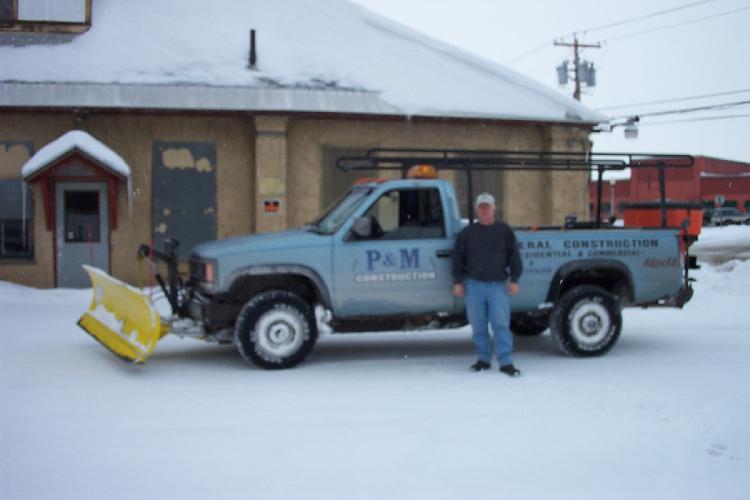 I am not aware of how long it was Starbuck Arena. Someone told me it was a garage for a short time. What year was it? Who operated it? What were the mechanics' charges per hour? What was the price of gas? Coming now into the age of the die-cast plant. Who decided at the New York Air Brake to make it a die cast operation? What year was it? Did they buy it or was it always a part of that business? Who worked there? How many people worked there? What were their wages? How many parts were made daily, and how did it affect the economy of Watertown? What happened? When did they close the doors? Who lost their jobs? When did they sell the furnaces and the molds? Who bought the items, how much, where did they go? Are they still being used today? The questions are endless. HISTORY! I was told a Box Company went in the building. When? What did they make? For how long? Who worked there? What happened? Put the time machine on fast forward to late winter, spring of 2003. Mike Minor of Brownville, New York, calls P & M Construction Company, owned by my son, Mike Mitchell and his partner, Scott Paris, for an estimate on the building so that he could put a paint ball business in there. The cost was prohibitive for him and some of the neighbors were against it. At that time, we heard a church had looked at it, and about the same time, someone looked at it thinking of an indoor go-cart track. And then it occurred to me that this building is exactly what P & M Construction Company needed. We needed a large area for fabrication, vehicle storage and office space. We could co-share it with our other business, Storage Management Systems, where we store documents and shred documents for individual and businesses. Maybe we will rent out offices; maybe have a deli someday with a boxing theme - a two story eating facility with outdoor dining in the summer and surrounded by lovely flowers and shrubs. We can showcase our talent with P & M Landscaping Division. We have lots of ideas; 5 years of incremental goals for expansion. Some of the ideas are to be kept a secret (the entrepreneur's edge). History will reveal when our dreams and goals will come true. We pray for God's blessing on us and the goals for building and land, and may it be a blessing for generations to follow. For now, we are living our lives. It's our story, but it wouldn't be if someone did not have a need and a dream way back in 1915. Webmaster's note: This building now houses the headquarters of SMS Custom Homes, P&M Construction and the Highway Legends Car Club. |
© 2024 Reproduction of this World Wide Web Site in whole or in part is prohibited without permission. All rights reserved. Trademarks and copyrights are the property of the respective owners and may not be used without permission.  |